11.21.2013
11.19.2013
Da Vinci's Viola Organista

The Viola Organista was designed by Leonardo Da Vinci and built by Slawomir Zubrzycki.
‘‘This instrument has the characteristics of three we know: the harpsichord, the organ and the viola da gamba" says Slawomir Zubrzycki.
Sadly Da Vinci never got to hear his invention, but you can here!


11.18.2013

11.13.2013
On This Day in 1992

Bram Stoker's Dracula was released November 13th, 1992.
Directed by Francis Ford Coppola, Dracula (1992) also incorporated practical special effects.
Dracula himself was portrayed by master character actor Gary Oldman.
11.09.2013
St. Mary’s Graveyard

Dracula takes Lucy Westenra, during the night, to St. Mary’s Church, Whitby, in Bram Stoker’s classic novel.
11.08.2013


11.07.2013
Only Pictures Remain


artist:
Alexander Korzer-Robinson
Eviscerating text and whitespace- leaving only the images.
Alexander Korzer-Robinson
Eviscerating text and whitespace- leaving only the images.
11.06.2013


11.05.2013


11.02.2013
#1, again!
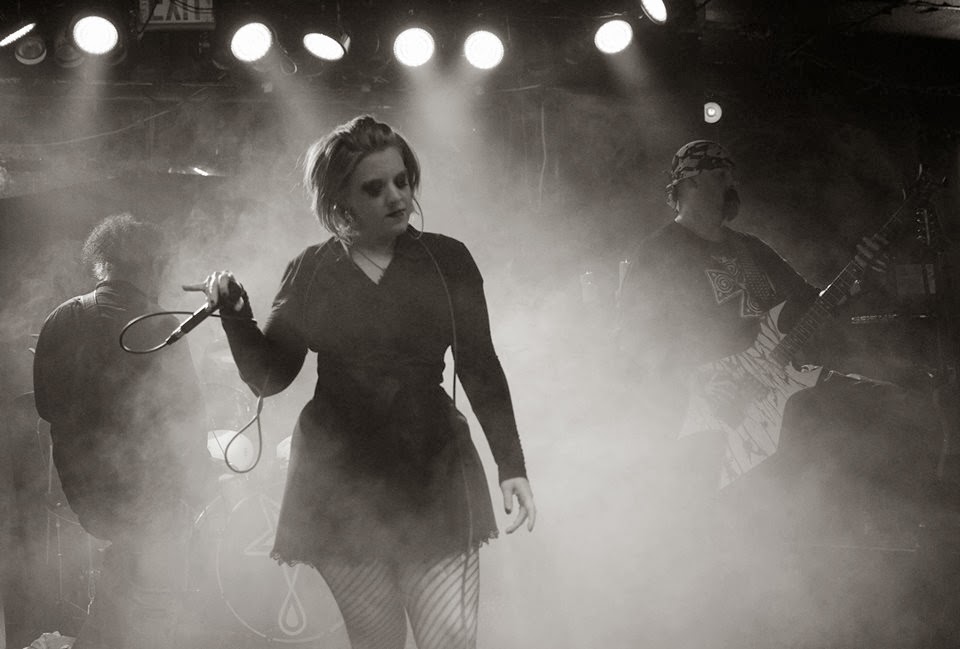
Thank you!
We're number 1 on the Reverb Nation Metal charts for Syracuse, NY. http://www.reverbnation.com/
*photo by Eileen's Images
We're number 1 on the Reverb Nation Metal charts for Syracuse, NY. http://www.reverbnation.com/
*photo by Eileen's Images
10.31.2013


10.28.2013


10.20.2013
Bela Lugosi

Bela Lugosi (1882–1956)
birth name- Be'la Ferenc Dezso Blasko
Born on October 20, 1882.
Died August 16, 1956
"Every actor's greatest ambition is to create his own, definite and
original role, a character with which he will always be identified. In
my case, that role was Dracula."
10.10.2013

10.07.2013
Charlie's Little Tramp

Charlie Chaplin’s Little Tramp costume at the V&A museum.
According to Chaplin’s autobiography he created the Tramp’s outfit from deliberately contradictory elements: baggy pants, tight jacket, oversized shoes and small derby hat provided by fellow actors and whangee cane owned by himself. Accessories such as the high-collar shirt, check waistcoat and tie are not accounted for, but Chaplin claims to have added a moustache to make himself appear older. In this first manifestation, the Tramp is scruffier and less affecting than he became later. The cigarette adds to his louche appearance and the cane is a parody of gentleman’s attire. Chaplin gives a professional clown’s performance in the tradition of the North American Tramp/Hobo; his costume is based on a collage of mismatched pieces that appear to have been randomly collected from discarded clothing … While the dissonant parts of the Tramp’s outfit do not cohere into a sartorial whole, their recombination indicates the character’s aspirations to be a dandy.
The Tramp’s clothes draw attention to the social significance of dress as well as to his affectation, which Chaplin developed as a feature of his performance. The collage effect, deriving from popular forms such as the circus and street theatre, resonates with the aesthetic strategies of the Surrealists and others. The pastiche of styles portrays the character as a fabrication, a social type rather than a rounded individual. While the rudiments of psychological motivation are there in the costume’s ridicule of the Tramp’s desire to belong to a higher class, the emphasis on disguise focuses the viewer’s attention on Chaplin’s self-presentation as star performer … The Tramp and his costume become the spectacle.
- Film and fashion expert Pam Cook.
9.30.2013


9.25.2013

Subscribe to:
Posts (Atom)